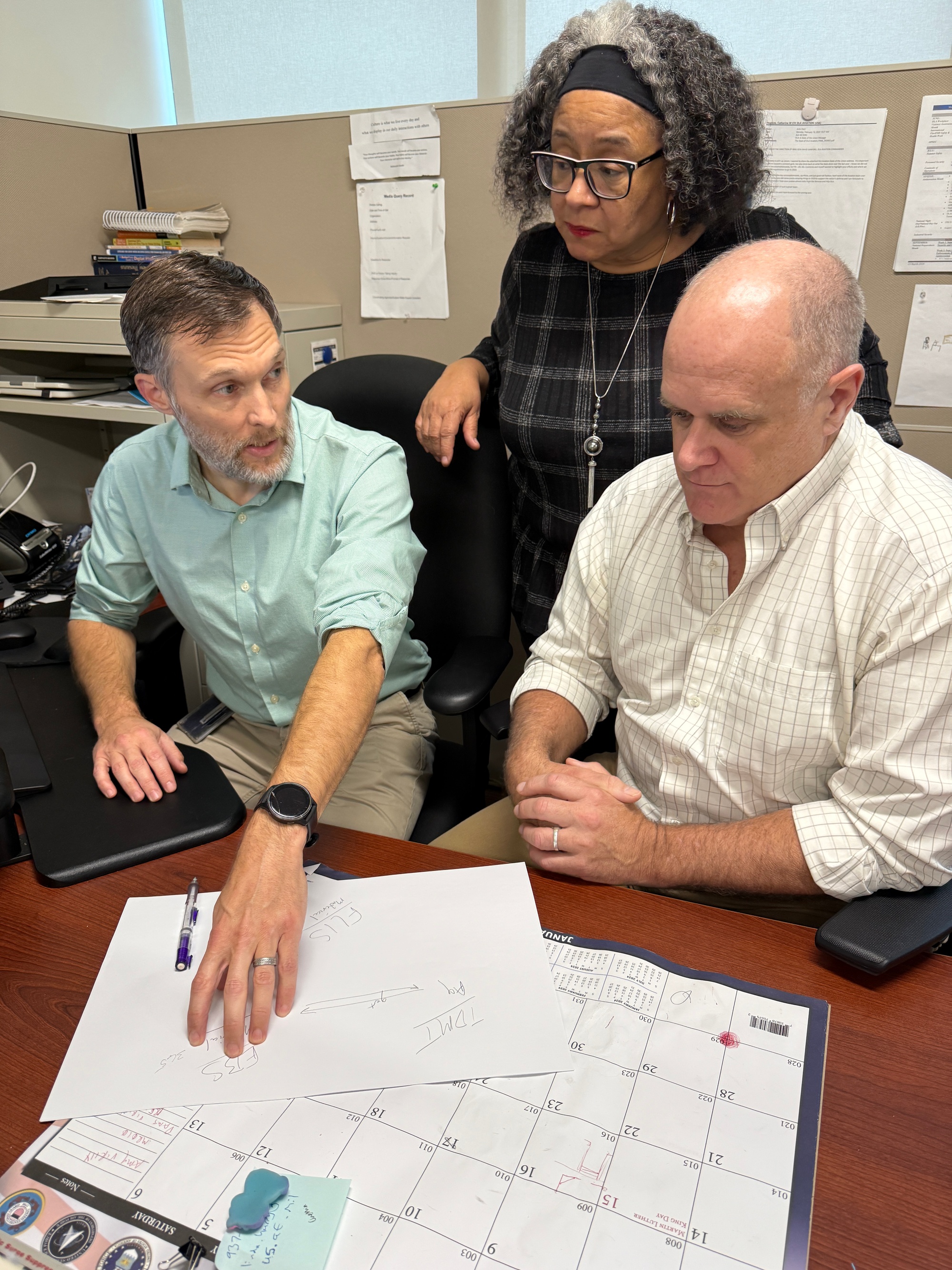
The operational question
In this illustrative evidence scenario, a evidence analyst uses AI to reconstruct an AI-assisted decision. The workflow draws on source records, rule versions, and decision receipts. Its central risk is uncertainty disappearing as evidence moves between systems. The design question is how to release the lineage assessment for authorized reviewers while preserving the separation between observed facts and interpretation. This is a proposed evaluation scenario, not a report of an Archetypal customer deployment or a demonstrated operational outcome.
Preserve source provenance
An answer becomes reviewable when its relationship to the underlying evidence remains visible. Keep the source identifier, relevant time, permitted use, and transformation history attached to the information that matters for the decision. Distinguish a direct observation from a report about an observation, and distinguish both from the model’s own interpretation. These distinctions should survive summarization. Do not ask a citation to establish more than its source can support. A source may confirm that a report was written without confirming that the reported event occurred. A reference may be current while the underlying observation is old. Reviewers need enough context to identify those differences.
Put the control in the workflow
Place this review immediately before the team can release the lineage assessment. The evidence analyst should see the proposed result beside the relevant parts of source records, rule versions, and decision receipts. Identify which statement is supported by a source, which is an interpretation, and which remains unresolved. Carry the separation between observed facts and interpretation into the decision record rather than relying on a reviewer to remember it from another screen. If the evidence does not establish the condition required for release, route the case to its owner with a concrete question. The interface should make the missing fact discoverable and the next action clear.
A test that can change the design
A source is replaced with an older but similarly worded record. The expected result is a visible freshness difference and a review of whether the evidence still applies. Run the case using a fixed version of the scenario and the policy under review. Ask an independent reviewer to identify the decisive fact before seeing the system’s disposition. Compare that interpretation with the result. Where they disagree, preserve both explanations and inspect whether the difference comes from the rule, the available evidence, or the interface. For decision lineage analysis, include source time, rule context, and review record in the review packet. Repeat the test after a correction and retain the original failure as part of the evidence.
Evidence to retain
The minimum useful record connects the purpose of the task, source time, rule context, and review record, the applicable policy version, and the final disposition. Add the identity or role of the responsible reviewer, the conditions attached to approval, and the unresolved questions. If the team proceeds, distinguish the approval from an observed completion. If it stops, explain what evidence or authorization would allow another review. Keep source permissions attached to the record when it moves to authorized reviewers. Do not assume that permission to read the initial source includes permission to reproduce it in every downstream system.
What a result would establish
A successful run would show that this configuration recognizes the tested boundary for decision lineage analysis and gives the evidence analyst an interpretable next step. It would not establish complete coverage of other audiences, source conditions, applications, or mission environments. Report the scope with the finding. Review any decision to release the lineage assessment under changed conditions as a new applicability question. The strongest next experiment is usually the smallest change that could make the current conclusion false.
Review before wider use
Ask the workflow owner whether the proposed control is understandable at the point of use. Ask the policy owner whether it preserves the source requirement. Ask the evaluator whether the test can distinguish a real improvement from a change in presentation. Finally, ask the deployment owner what happens when source records, rule versions, and decision receipts are unavailable or the integration no longer observes the required event.
Review checklist
Authority